From the OR to the Atmosphere: Anaesthetic gases matter

01 December, 2025
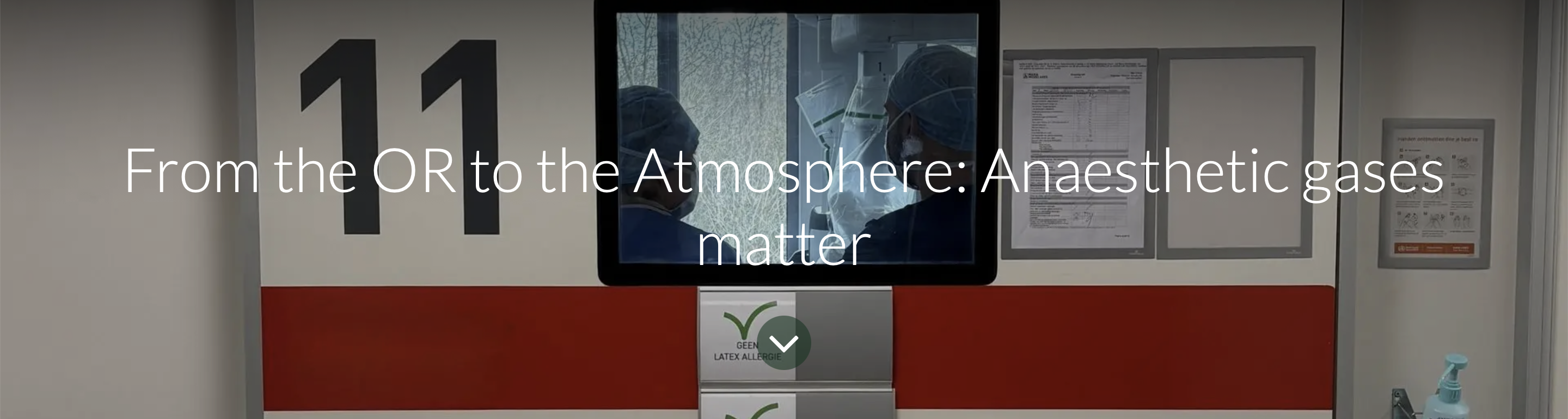
Did you know some anaesthetic gases are hundreds or even thousands of times more harmful to the climate than CO₂? As sustainability gains momentum in healthcare, anaesthesia’s environmental impact is facing scrutiny. Anaesthetic gases typically account for around 5% of a hospital’s CO₂e emissions, but this share can rise considerably when less sustainable practices are used.
This hidden impact stems from the fact that all volatile anaesthetic gases used in operating theatres are potent greenhouse gases. They are hardly metabolised by the human body and are exhaled almost entirely into the environment. Once released, they remain in the atmosphere for years, or even more than a century in the case of nitrous oxide (N₂O). But change is underway.
The environmental cost of keeping patients asleep
Not all anaesthetic gases are created equal. Their climate impact comes down to two things: how long they stick around in the atmosphere and how powerfully they trap heat. This is called the Global Warming Potential (GWP). And the numbers are jaw-dropping. Desflurane tops the list with a GWP₁₀₀ of 2,590, meaning a single kilogram warms the planet as much as 2,590 kilograms of CO₂ over a horizon of 100 year. Isoflurane (539), nitrous oxide (273) and sevoflurane (195) score lower but are still far from harmless. Small amounts add up to a big problem.