AXREM publishes Stroke Pathway Paper on World Stroke Day 2025

11 December, 2025
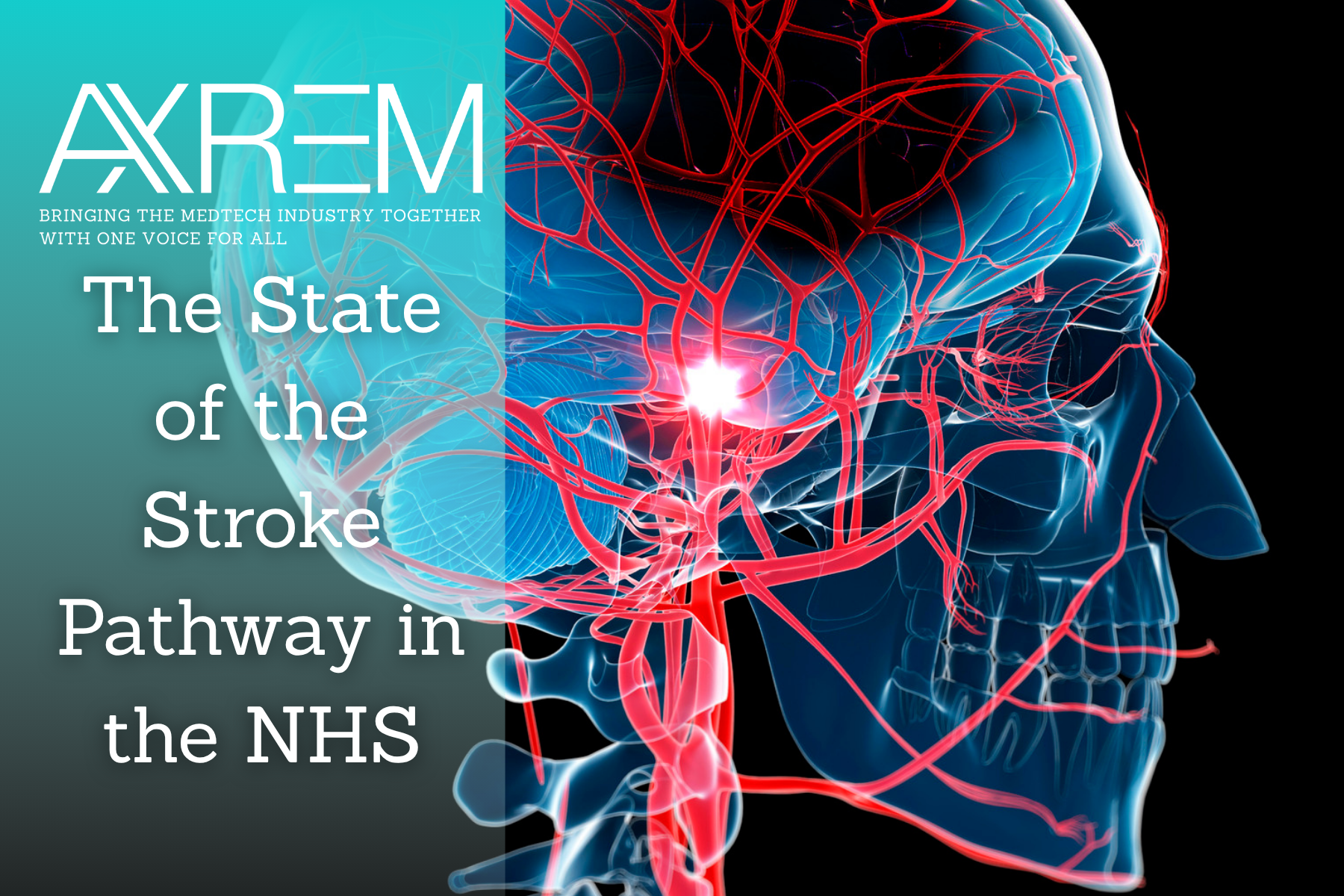
To mark World Stroke Day (29 October 2025), AXREM has released a new report:
“The State of the Stroke Pathway in the NHS: Challenges and Solutions through AI, Advanced CT Imaging, and Teleradiology – An Industry Perspective.”
Stroke remains one of the UK’s most urgent healthcare challenges, with more than 100,000 new cases every year and incidence projected to rise by 50% by 2035. Despite decades of progress, national audit data shows that performance across the stroke pathway has plateaued, with wide regional variation and persistent pressure on clinical resources.
Stroke is one of the most time-sensitive emergencies within modern healthcare, requiring immediate and coordinated intervention to minimise brain injury and improve functional recovery. With more than 100,000 new stroke cases annually in the UK and projections indicating a 50% increase by 2035, the condition continues to represent a major clinical and economic burden. Despite national initiatives, recent audit data reveals that performance across the stroke care continuum has plateaued, with persistent regional disparities and mounting pressure on clinical resources. This paper presents a comprehensive industry perspective from AXREM on how artificial intelligence (AI), multimodal computed tomography (CT), and teleradiology can be leveraged to address these challenges. It offers a detailed review of stroke pathway performance, identifies critical failings, and sets out actionable, technology-driven recommendations to support transformation across NHS stroke services.
Key findings highlighted in the paper include:
1. Average time from stroke onset to hospital arrival is 88–90 minutes, well above the 60-minute target.
2. Fewer than half of patients are admitted to a stroke unit within four hours.
3. National thrombectomy rates remain at 4%, far short of the NHS aspiration of 10%.
Stroke care in the NHS is at a critical crossroads. As demand rises and performance lags behind international benchmarks, transformation is no longer optional. The technologies to revolutionise stroke care, AI, multimodal imaging, and teleradiology—are already available and proven. AXREM urges health system leaders to act decisively in embedding these tools into the national care infrastructure. Doing so will not only save lives but also reduce long-term disability and economic strain. AXREM and its members remain committed to supporting this transformation through innovation, expertise, and long-term partnership with the NHS.
AXREM sets out a series of technology-driven recommendations to transform stroke care, including the wider use of multimodal CT, AI-assisted diagnosis, and formalised teleradiology services to ensure equitable, 24/7 access to expert care.
James Bill, AXREM Future Leader Council Chair said: Every five minutes, someone in the UK has a stroke, yet fewer than half reach a stroke unit within four hours. Our stroke pathway report highlights where standards are missed and how industry can help: advanced CT, AI decision support, teleradiology, workforce planning, and prehospital video triage to deliver faster, fairer care. My thanks to the future leader members for pulling this together.
Sally Edgington, AXREM CEO said: "Stroke care in the UK is at a tipping point. The data is sobering, but it’s also a call to action. Our new Stroke Pathway Paper lays bare the gaps in performance, access, and equity, while offering a clear roadmap for transformation through technology.
AI, advanced CT imaging, and teleradiology are not future ambitions, they are a present day solution. The challenge now is to embed them systematically across the NHS, ensuring every patient, regardless of postcode, receives timely, expert care.
AXREM and our members are deeply committed to this mission. We stand ready to partner with NHS leaders, clinicians, and policymakers to deliver the innovation, infrastructure, and insight needed to reshape stroke services. When it comes to stroke, every minute matters and every decision must be made with urgency, clarity, and compassion.”
The full paper can be downloaded HERE
Note:
AXREM members supply the majority of diagnostic medical imaging and radiotherapy equipment installed in UK hospitals. In doing so, our member companies and their employees work side by side with Radiologists, Radiographers, Practitioners, Oncologists and a wide range of healthcare professionals in delivering healthcare to patients using our technologies.
Our members therefore have unique knowledge, experience and insight into the workflow and challenges faced by healthcare professionals on a day-to-day basis, which enables us to develop and offer innovative solutions to improve the speed and quality of diagnostic procedures and treatments with our ultimate aim of improving patient care.
Although our members operate in a highly competitive commercial environment and in strict conformity with UK laws and regulations, certain issues such as this require focus and resolution on an industry-wide basis.
For further information about this press release please contact AXREM Chief Executive Officer – Sally Edgington
AXREM, Rotherwick House, 3 Thomas More Street, London, E1W 1YZ
E sally.edgington@axrem.org.uk
T 07717 058649