
Pharmaceuticals in wastewater: what can you do about it?

04 December, 2025
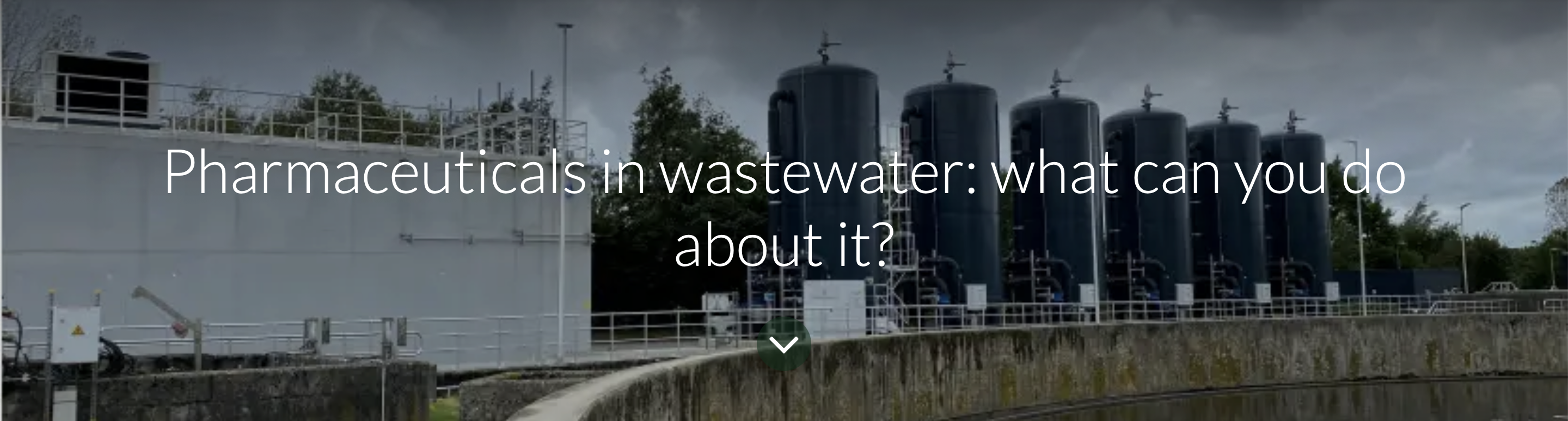
On September 27 2024, our co-founder Dr. Brecht De Tavernier was invited at Aquafin by the Flemish Knowledge Center for Water (VLAKWA). At their theme day on the green deal for sustainable care regarding medicines in wastewater, Brecht was invited to give a presentation to start the discussions on this topic.
Pharmaceuticals in wastewater: what can you co about it?
The European Water Framework Directive (WFD) is the most important European legal instrument for protecting water bodies. It is best known for stating that all surface and groundwater should be of good quality by 2027. The WFD has a list of 45 polluting chemicals (industrial chemicals, pesticides, medicines, and metals) that are designated as priorities. Once on the WFD list, the negative effects on the environment must be resolved within 20 years.
The WFD has the following medicines on its high-priority list:
- Carbamazepine. Carbamazepine, used to treat epilepsy and sometimes complex pain issues (brand name: Tegretol), was detectable in 62% of rivers worldwide and has a very negative effect on plants and fish. Demonstrated effects are negative impact on hormonal balance and fertility, lower immunity, and altered behavior.
- NSAIDs Diclofenac and Ibuprofen. The NSAIDs (medications for fever and inflammation) diclofenac (brand name: Voltaren) and ibuprofen (brand name: Nurofen) are the medicines that are measurable in the highest concentrations in the Baltic Sea. Diclofenac has been on the WFD list since 2015. Both are highly ecotoxic to plants and fish but have particularly severe negative effects on birds, especially vultures, which are extremely sensitive to even low concentrations of diclofenac. They develop kidney failure as a result and die. The wild populations of the Asian white-backed vulture have already declined by 95% due to severe pollution with active ingredients from NSAIDs in the rivers of Pakistan and India, as well as from consuming carcasses of cattle treated with diclofenac for joint inflammation. Ibuprofen is still significantly inactivated in the classical process of water purification (physical and chemical treatment), but this is not the case for diclofenac: it enters the environment in its active form and causes considerable environmental damage.
- Estrogens. The WFD has included the estrogens estrone (E1) (brand name: Aacifemine), 17-beta-estradiol (E2), and 17-alpha-ethynyl-estradiol (EE2) (brand names: Progynova, Estrofem) on this list. In nature, they act as endocrine disruptors for many animals and plants and have a negative effect, especially on small invertebrates and fish.
- Macrolide Antibiotics. The macrolide antibiotics azithromycin (brand name: Zithromax), erythromycin, and clarithromycin (brand name: Biclar) have a negative effect on algae, crustaceans, fish, and invertebrates. They cause oxidative stress, negative effects on gene expression, energy metabolism, and DNA replication and repair. Ultimately, these antibiotics released into the environment also have negative effects on antibiotic resistance (Antimicrobial Resistance or AMR). Among the macrolides, the negative environmental impact seems to be the most for azithromycine and the least for erythromycin. Similarly, the negative effect on antibiotic resistance appears to be most for clarithromycin and least for erythromycin.
How is Belgium doing?
Not well. In a measurement of active pharmaceutical ingredients in 137 rivers, a concentration of over 10,000 ng/L of active medicines was measured in a Brussels river. This places the water quality in Brussels among the worst 20% of rivers in the world regarding the presence of active medicines.