Gallery
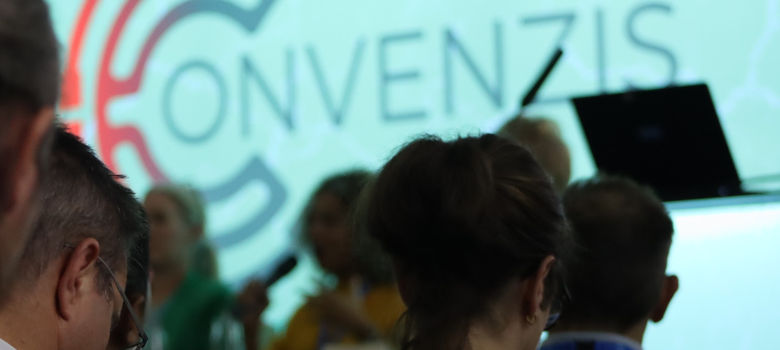 MHVision Conference Gallery


Driving System-Wide Mental Health Transformation: A Strategic Summit for NHS Leaders - All Convenzis Events Provide 8 CPD Points Per Delegate
Take part in our conference prize draw by visiting all stands and scanning your lanyard at each for a chance to win £100 voucher.






Mental health remains one of the NHS’s defining priorities, shaping both policy and system design for the decade ahead.
Record demand - with more than 4.6 million people now in contact with NHS mental health services - continues to test capacity, equity, and workforce resilience. At the same time, the NHS 10-Year Health Plan and the Government’s Mental Health Strategy set a clear ambition: earlier access, community-based care, 24/7 crisis support, and true parity with physical health.
MHVision 2026 brings together senior NHS, local authority, and voluntary sector leaders to examine how these ambitions translate into integrated, sustainable, and prevention-focused services.
The event focuses on capability, collaboration, and outcomes, helping systems strengthen governance, digital readiness, and workforce wellbeing to deliver accessible and equitable mental healthcare for all.
Summit Focus:
This year’s summit will focus on the levers of long-term transformation: system integration, early intervention, workforce sustainability, and digital innovation. Delegates will explore how to embed co-production, data-driven decision-making, and community partnerships within modern mental health systems.
Skill Clinics and Lessons Learned Sessions will give attendees practical frameworks for implementing digital tools, improving staff wellbeing, and ensuring patient voice drives change at every level.
Delegate Outcomes - Delegates will leave with strategic insight and practical frameworks to:
What’s New for 2026:
2026 marks the evolution of Convenzis mental health events into a training-led and outcome-driven format, ensuring every attendee leaves with actionable insight.
These updates deliver clear delegate outcomes and ensure that every participant leaves equipped to strengthen systems, people, and services.
Why Attend:
Who Would Benefit:
This summit is designed for NHS and system leaders responsible for delivering mental health strategy and reform, including:
Industry partners and innovators will also gain valuable insight into NHS priorities, digital needs, and workforce challenges shaping the next decade of mental health care.
We have an invite only option for NHS Senior Managers for our conference, to see if you qualify for a complimentary place please click the button below.






designate of the Black Country Integrated Care Board
Read biography
Leicester, Leicestershire and Rutland ICB
Read biography




North London NHS Foundation Trust
Read biography
NHS England
Read biography
Leeds ICB/ Leeds & York Partnerships NHS Foundation Trust
Read biography
Registration & Networking
Registration - Open from 8:20 am - Closes at 11:00 am
All delegates must complete their registration process before the 11:00 AM cut-off time. Please arrive in a timely manner to allow for registration and to avoid any inconvenience. Delegates who arrive after the registration deadline will be refused entry to the event.
We appreciate your cooperation in helping us maintain the event's schedule and ensuring that everyone can fully participate in the conference. If you have any questions or require assistance, our event staff will be available to assist you with the registration process.
Thank you for your understanding, and we look forward to an insightful and productive event together!
Keynote Presentation - Specialised Services within the wider mental health pathway - a national and regional perspective
Session Overview:
A presentation on how specialised MHLDA services form part of the wider pathway, including the changes since the introduction of NHS-Led Provider Collaborative and the delegation of responsibility for commissioning to ICBs since April 2025.
Morning Skill Clinic - Improving Patient Flow Across Mental Health Systems: From Inpatient Pathways to 24/7 Crisis Response
Session Overview:
Improving patient flow across mental health systems remains one of the most complex and pressing challenges facing the NHS. Delays in discharge, variation in inpatient pathways and inconsistent crisis response models continue to impact patient outcomes, staff experience and system performance.
This skill-focused session will draw on national GIRFT work to explore how systems can take a more structured, data-driven approach to improving flow across both inpatient and urgent and emergency mental health services.
Bringing together insights from the development and deployment of a mental health system maturity tool, alongside real-world learning from crisis care transformation and 24/7 service models, this session will focus on what is working in practice and how similar approaches can be applied locally.
Key Learning Outcomes:
Case Study - From Conversation to Action: Leveraging AI to reduce delays in Mental Health Care Delivery
Case Study - Beam
Session Overview:
AI is rapidly being introduced into mental health services to reduce administrative burden, improve data capture, and support staff well-being. But most tools weren't built for this world. They were designed for short, structured consultations - not the long, layered conversations that span safeguarding, social context, and clinical risk all at once. That mismatch has a cost. Across community teams, crisis services, and therapy pathways, clinicians routinely hear something critical in the room, but the system can't act on it for hours - sometimes days.
We call this narrative latency: the gap between a clinician hearing something important and the system being able to respond. It's not just an admin problem. It's a patient safety problem, and a hidden barrier to every shift the NHS is trying to make. Drawing on frontline experience and large-scale implementation of Beam's AI tools across UK services, this session explores why mental health care delivery demands fundamentally different tools and approaches - and what separates pilots that stall from those that scale into real clinical workflows.
Case Study - Patient and System Level Challenges in the care of Schizophrenia
Case Study - Teva UK Ltd
Leadership Lessons - Decision, Not Disruption: Using AI and Digital Tools Safely in Mental Health Care
Session Overview:
Drawing on your experience as a CCIO, the discussion will explore:
Presentation - Designing a Practical Bridge Between CAMHS and Adult Mental Health Services
Session Overview:
This presentation will outline how the Barnet 18-25 Transitions Pathway was designed to reduce disruption between CAMHS and adult mental health services. It will describe the practical mechanisms used to improve continuity of care, including transition planning, keyworking and multi-agency coordination, and will reflect on early learning for systems seeking to implement a similar model.
Lunch and Networking
Lunch and Networking
NHS Deep Dive - Tackling Ethnic Inequalities in mental health services: Systems Convening, Creative Methodologies and Centering Lived Experience
Session Overview:
In 2023, the HSJ awarded the Synergi Leeds Partnership the ‘Mental Health Innovation of the Year’ and commended the programme for its commitment to tackling racial inequality in mental health. At the heart of this work are several key principles: the importance of a whole-systems, life-course approach; explicitly surfacing the operation of racism and discrimination; centring Lived Experience; using creative methodologies to facilitate new conversations; prioritising psychological safety; and promoting diverse, inclusive leadership.
This session will showcase how an ambitious citywide innovation has evolved into a workstream that amplifies ethnically diverse community voices, challenges prejudice, influences service delivery, and supports the building of trust between communities and statutory services.
Drawing on evidence and stories from Leeds, the speakers will highlight the importance of innovation in advancing racial justice within mental health services—and will call for the courage to do things differently and to challenge traditional assumptions about what counts as evidence.
Presentation - Closing the Gap: How Digital Solutions Can Support Patients Between Referral and Recovery
The session will cover:
NHS Skill Exchange - Supporting the Mental Health Workforce: Practical Approaches to Preventing Burnout and Sustaining Clinicians (TBC)
Session Overview:
The sustainability of mental health services is increasingly dependent on the wellbeing and resilience of the workforce delivering care. Rising demand, complex patient need and ongoing system pressures are contributing to high levels of burnout, stress and workforce attrition across mental health services.
In this practical skill clinic, Dr Helen Garr will draw on her experience supporting thousands of healthcare professionals through NHS Practitioner Health to explore the realities of burnout within the NHS workforce and what can be done to prevent it. The session will focus on practical tools, behaviours and leadership approaches that help clinicians recognise early warning signs, protect their own wellbeing and create healthier working environments within pressured services.
Designed for NHS leaders, clinicians and service managers, the session will provide realistic strategies that can be applied within everyday practice to support both individual wellbeing and long-term workforce sustainability.
Session Focus:
Workshop - Finding your blind spots
In this practical skills clinic, Registered Mental Health Nurse and Educator Ruth Jacobs, and GP Dr Gurnak Dosanjh will explore the realities and challenges of building psychologically safer environments where patients and staff can thrive. In this session you will leave feeling empowered to create a culture of confidence and compassion within your organisations.
MHVision Conference Gallery