Patient Flow & Care Coordination

NHS Patient Flow Virtual Conference

Book tickets

Start
11:00 am
Finish
15:00 pm
Date
21 Jul, 2020 - 22 Jul, 2020
Location
Virtual Event: GoTo,
NHS Patient Flow Virtual Conference

NHS Patient Flow Virtual Conference

NHS Patient Flow Virtual Conference

In the wake of the COVID-19 outbreak, Convenzis are committed to providing our public services with current policy updates and the sharing of best practice to help improve collaborative working and practical examples of innovation through these testing times.

All our virtual conferences are all split across 2 short but content-packed days, day 1 will focus on the sharing of best practices, national policy insights and innovation,

On day 2 speakers will continue their presentations focusing on the key take always and lessons learned, interactive question and answer sessions throughout will open the debate up and give you the chance to have your say.

With increasing pressure on emergency services, and as technology and the needs of the population change, the UEC system must also change to ensure a service fit for the future. Improvement initiatives are being implemented across the NHS to reduce pressure and simplify urgent and emergency services, resulting in better outcomes of care and experience for staff and patients. NHS England

The NHS responds to more than 110 million urgent calls or visits every year, so the UEC system must be working seamlessly to ensure patients are treated by the right person, as quickly as possible, NHS England & Improvement are rolling out some innovative pilots and programmes to help improve UEC statistics. Key subjects for NHS Patient Flow Virtual Conference:

Emergency Care Improvement Programme (ECIP): The Emergency Care Improvement Programme (ECIP) is a clinically-led programme that offers intensive practical help and support to 40 urgent and emergency care systems across England leading to safer, faster and better care for patients

Red2Green campaign: Sometimes patients spend days in the hospital that do not directly contribute towards their discharge, the team believe that by working better together we can reduce the number of these ‘red days’ in favour of value-adding ‘green days’.

Urgent treatment centres (UTCs): (UTCs) are GP-led, open at least 12 hours a day, every day, offer appointments that can be booked through 111 or a GP referral, and are equipped to diagnose and deal with many of the most common ailments people attend A&E for.

This is just a small example of the tireless work that healthcare bodies are putting in to ensure emergency departments are becoming more sustainable and patient care is improved, our NHS Patient Flow Virtual Conference will offer interactive speaker sessions and networking remotely and securely.

At NHS Patient Flow Virtual Conference We will welcome 12 sector-leading guest speakers as they talk us through the latest advancements in emergency patient care, the event will have an emphasis on technology and what we can expect for the future of urgent and emergency care.

Research sources for NHS Patient Flow Virtual Conference: NHS England, NHSX, Digihealth.net

Sponsors & Partners
Conference Speakers
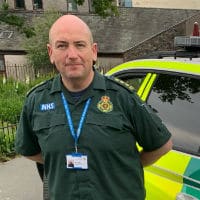
Andrew
Ormerod

Clinical Lead/AP for Urgent Care Practitioners

North West Ambulance Service

Read biography


Diane
Baynham

Director of Digital Care Pathways

Coventry and Warwickshire ICB

Read biography

Dr Ajith Kumar
Parlikad

Reader in Asset Management

Cambridge University Engineering Department (CUED)

Read biography


Dr Tom
Ling

Senior Research Leader, and Head of Evaluation

RAND Europe

Read biography

James
Gray

Head of Acute Sales

Servelec

Read biography

James
Roach

Director

West Essex Integrated Care Partnership

Read biography

Jenni
Woods

Health & Business Intelligence Lead

NHS Tayside

Read biography

Karen
Titchener

Strategic Development Director Hospital

Home Huntsman Cancer Hospital University Utah

Read biography


Mike
Proctor

Interim Chief Operating Officer

North Cumbria Trust

Read biography

Rob
O’Neill

Head Of Information

University Hospitals of Morecambe Bay NHS Foundation Trust

Read biography

The programme

11:00

Day 1 Case Study Sessions

Day 1 Case Study Sessions
11:45

Registration and Networking

Registration and Networking
12:00

Technology Delivered Faster

Discussion of how we made technology changes happen quickly when responding to Covid19, what principles of agile delivery helped?
12:20

Creating a digital patient flow journey

Understanding the challenges of patient flow for Trusts, nurses, clinicians and operational teams. Could a digital solution be the answer to patient flow and bed management?
12:45

Networking and Panel Discussions

Networking and Panel Discussions Roundtable Discussions: Servelec Catalyst BI
13:05

Patient-flow modelling and resource demand prediction during COVID-19

Hospitals worldwide faced an unprecedented and uncertain influx of patients with a high-resource consumption during the first wave of COVID-19. Hospitals were required to make regional predictions on hospital admission and resource requirements to plan, prepare and respond to the crisis. This presentation aims to provide insights based on the experience and modelling efforts of Addenbrookes Hospital, based in Cambridge (UK), to predict local hospital admissions, model patient flows through the hospital and estimate subsequent use of resources. The application of a stochastic approach provided a more informative prediction of the demand for critical resources. In particular, analysis of bed occupancy during the COVID-19 surge shows that the bed occupancy does not follow a normal distribution as suggested by deterministic/epidemiological models, which has significant operational implications during the recovery phase of the pandemic. The approach offers a general simulation methodology for regional hospitals to predict a wide range of essential hospital resources during further possible waves of surges COVID-19 patients.
13:25

Streamlining Care Home Residents Journeys for Improved Outcomes”

Bexley Health Neighbourhood Care (BHNC) manages 30 care homes in the Bexley Region. Traditionally care homes are the least digitised of healthcare organisations, the coordination of care is very manual, paper based and a lack of cross organisational collaboration and communication. BHNC knew a solution was required to streamline the process of coordinating care for care home residents. This session will discuss how BHNC deployed a solution in a matter of days to improve care as a whole.
13:45

Networking and Panel Discussions
Networking and Panel Discussions Roundtable Discussions: Servelec Catalyst BI

14:10

Patient flow coaching programme: Evaluation findings

The Sheffield team, or Central FCA, has developed a one-year action learning course to train clinicians and managers in team coaching skills and improvement science. The programme builds on learning about care pathway level improvement and training improvement coaches from two previous Health Foundation-funded programmes
14:30

Hospital at Home: A model of community care to reduce the burgeoning demand on Acute Hospitals

This presentation will discuss how a Hospital at Home model of providing acute care closer to home could be the answer to helping address the ever-increasing demand on Accident and Emergency and acute hospital beds. There is an increasing prevalence of chronic disease with older people living longer with more complex comorbidities that are placing significant demand on the acute health care systems.
14:50

Networking and Panel Discussions

Networking and Panel Discussions

11:00

Day 2 Case Study Sessions

Day 2 Case Study Sessions
11:45

Registration and Networking

Registration and Networking
12:00

Digital First

Discussion on the supporting role of digital technology during the pandemic.
12:20

Case Study

Case Study
12:30

Case Study

Case Study
12:45

Networking and Panel Discussions

Networking and Panel Discussions Roundtable Discussions: Servelec Catalyst BI

13:05

Integrating services at the point of need – developing effective discharge to assess pathways across Integrated Care Systems.

Discharge to assess is a concept that most systems are now focusing on and prioritising however its ultimate success will depend on a new form of partnership working across health, social care, care sector, voluntary sector and the patients themselves. This presentation will explore the optimal care pathway for discharge to assess, the key challenges to address and how to create a culture of common endeavour so timely discharge from hospital becomes business.
13:25

Patient flow from an acute hospital perspective

– What good looks like – The challenge and frustrations from an acute perspective ( with some pathway and patient examples) – How to best engage hospital clinicians and wards ineffective discharge management – How the wider system can develop the optimal care pathway for discharge management, rehabilitation, and ongoing care
13:45

Networking and Panel Discussions

Networking and Panel Discussions Roundtable Discussions: Servelec Catalyst BI

14:10

Revolutionizing the right patient care with video capability in 111

Revolutionizing the right patient care with video capability in 111
14:30

Case Study

Case Study Keith O’Malley (Confirmed) Account Manager at Servelec
14:50

Networking and Panel Discussions

Networking and Panel Discussions

Our accreditations

abpco
Manchester Bee
Living Wage Employer
Good Employment
Good Employment Member
Armed Forces Covenant
Tech UK
IHSCM
FSB
Ban The Box
Stockport County
cpdgroup
Q-Park